Our latest version is here with some highly requested updates, including ratio metrics, and a new UI for showing experiment traffic splits. Check out the changes below. As always, please let us know if you have any feedback or ideas.
Ratio metrics! 🎉
Ratio metric configuration showing denominator selection for metrics like Revenue per Signup or Checkout Completion Rate
By default, metrics are evaluated against all users in an experiment. Now, we let you customize this by setting a denominator. For example, you can now create ratio metrics like “Revenue per Signup” or “Checkout Completion Rate”. Stay tuned for more updates to ratio metrics to handle even more advanced use cases!
New experiment assignment UI
We improved the UI when creating experiment rules for features. We now let you control the exposure percent independently from the traffic split. The preview at the bottom also now accurately represents how our bucketing algorithm works and shows how you can safely scale the exposure percent without causing users to switch variations.
New permissions and roles for feature flags
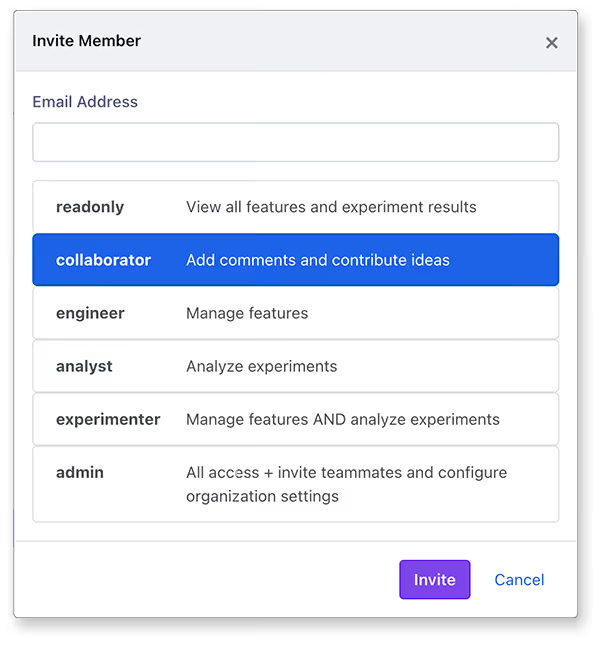
Revamped permissions and roles UI showing feature flag access controls as part of the role system
We revamped our permission system to incorporate feature flags into the roles. This change lays the groundwork for future improvements, such as per-environment and per-project permissions.
Syntax highlighting for SQL and Python input
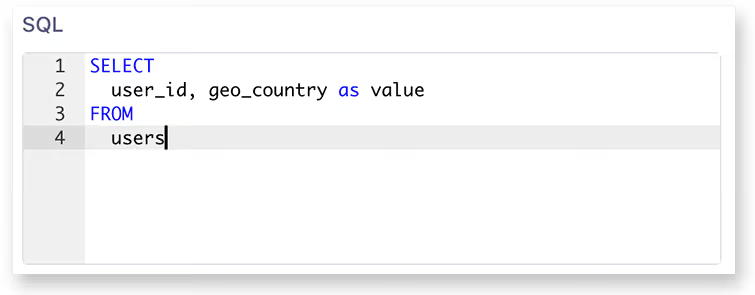
SQL and Python code editor with syntax highlighting, line numbers, and indentation support replacing plain text inputs
There are several places in the GrowthBook UI where we ask users to write code — usually either SQL or Python. We switched from using a plain text box to a full-featured code editor — the same one used by Mode analytics and others. This brings syntax highlighting, easier indenting, line numbers, and more highly requested UX improvements!
Ability to archive features
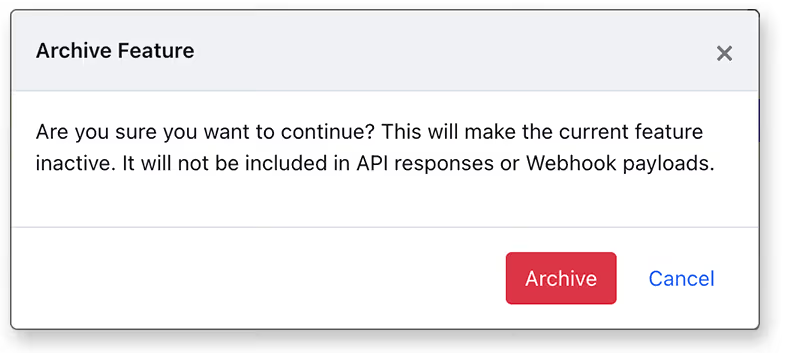
Archive feature option removing a flag from API and webhook payloads while preserving full revision history
You can now archive features and prevent them from appearing in API and webhook payloads without deleting them. Archived features are also hidden by default in the feature list. This is a great way to remove a feature while keeping the full revision history as areference in case you need it later.
Support for feature flags in Ruby SDK
Ruby SDK release completing feature flag support across all GrowthBook SDKs with a shared 300+ test case suite
The past couple of months, we’ve been updating all of our SDKs to support feature flags, and we just completed the final one — Ruby! In addition to feature flag support, all of our SDKs now use the exact same test suite (300+ test cases) to ensure we maintain full cross-platform compatibility. You can find the Ruby SDK here.