Trusted by 4,000+ companies worldwide





Make rigorous experimentation easy for everyone
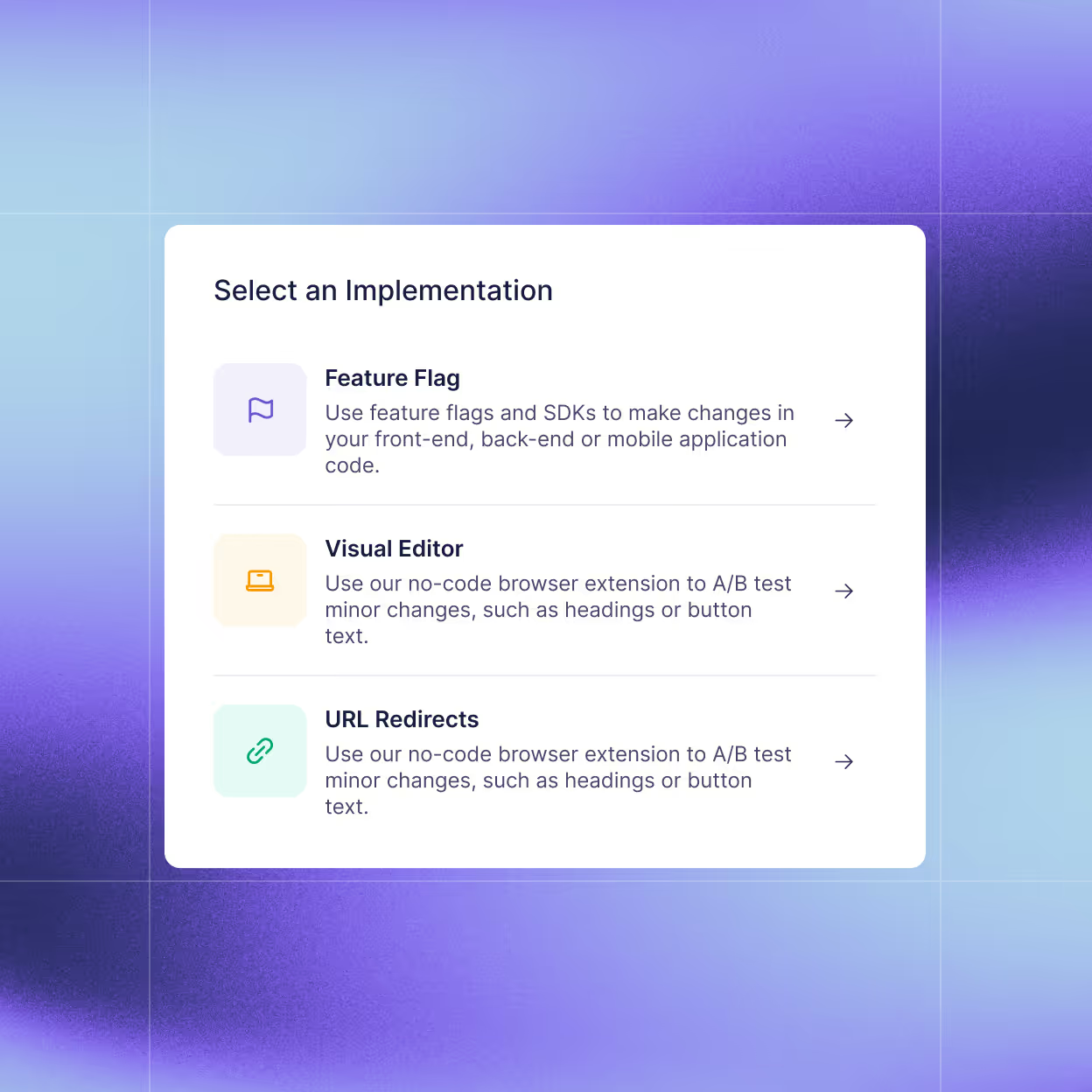
Experiment anywhere, your way
Customize metrics to your business
Apply rigorous statistical analysis
Built-in guardrails and workflows
Foster a culture of experimentation
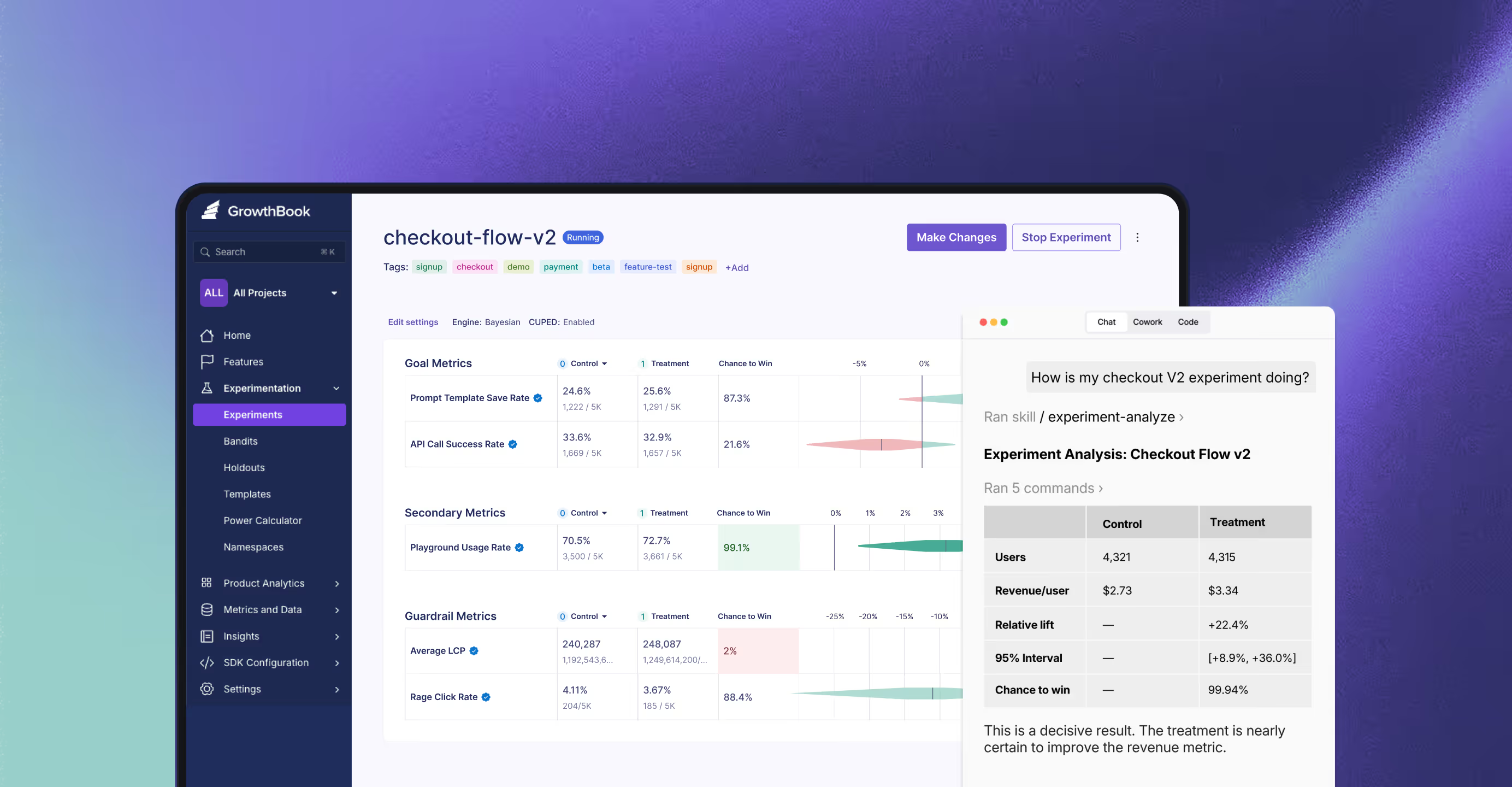
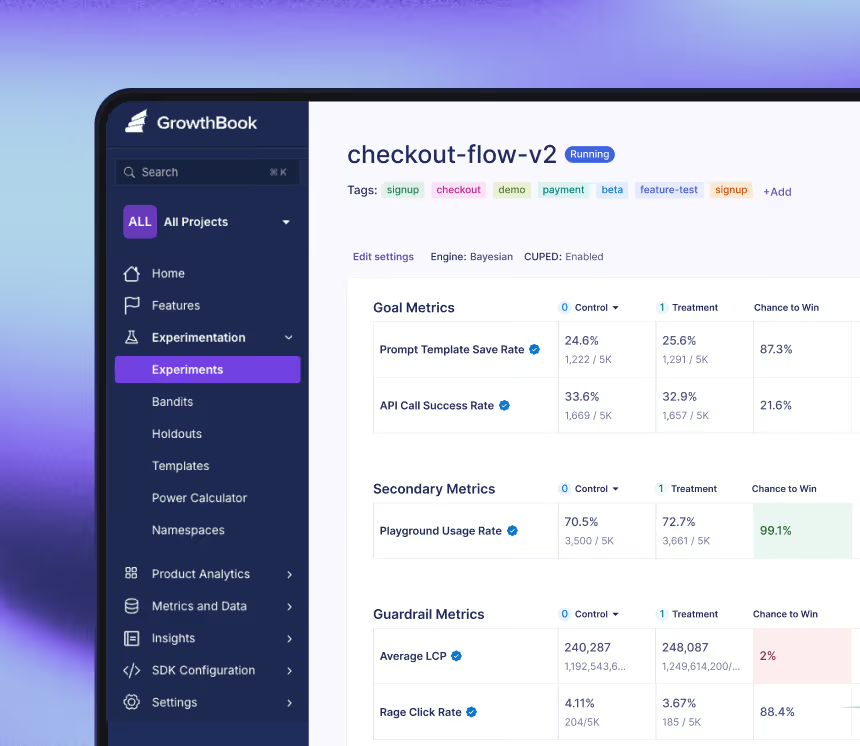
Build more winners, ship fewer losers
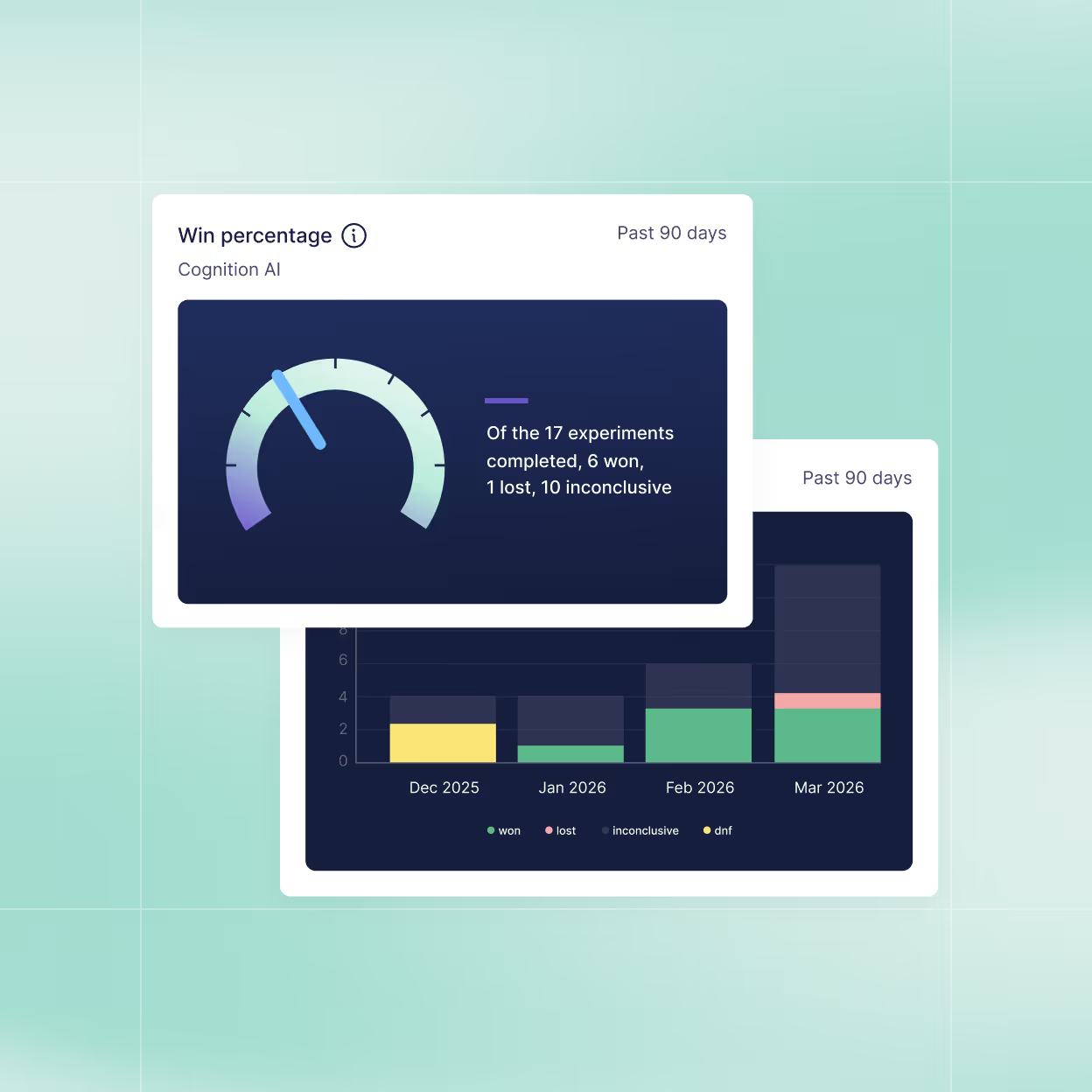
Stop guessing which features matter. Use decision frameworks to know when to ship, when to rollback, and how long to test. Measure experimentation over time with meta analyses and insights.
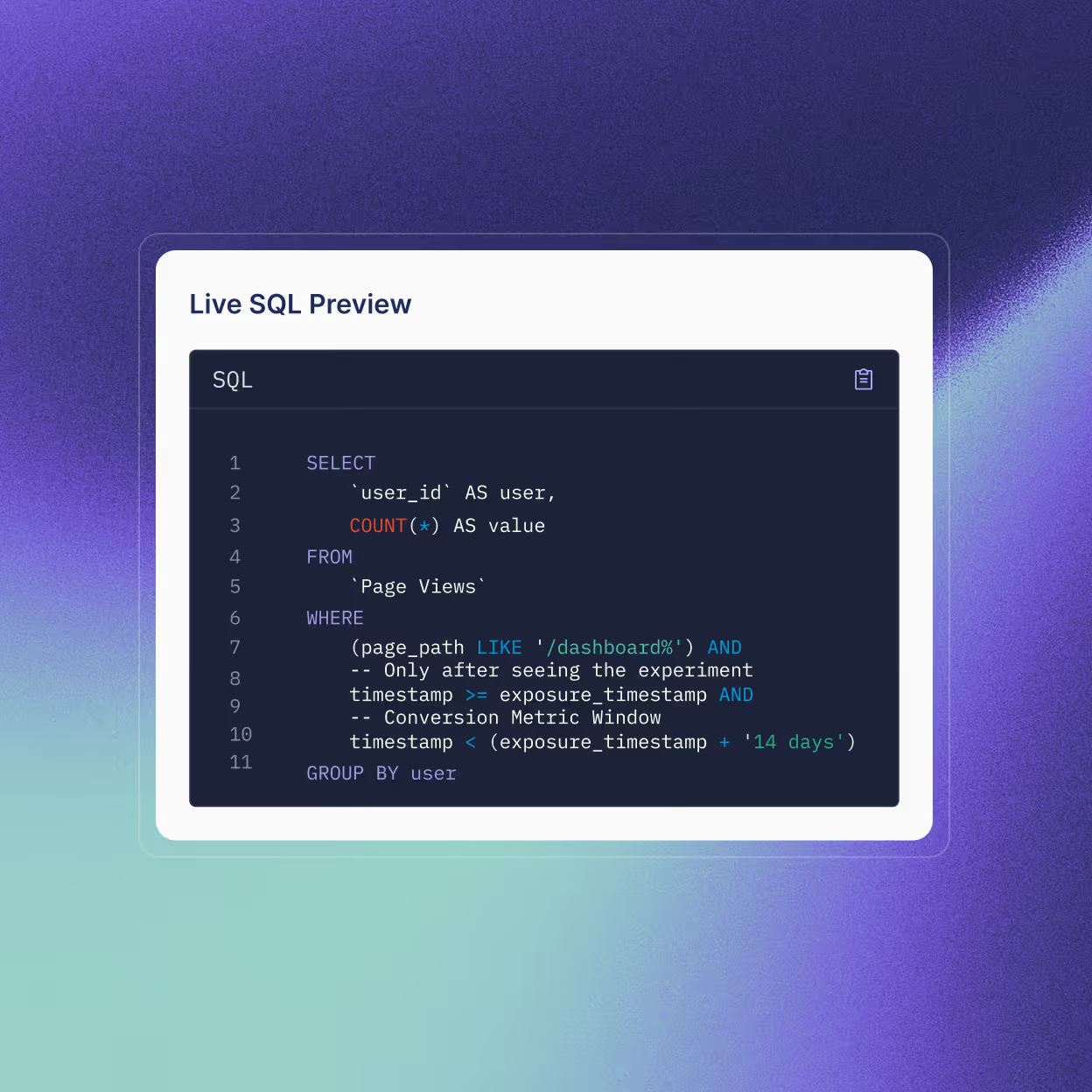
Create trust through transparency
Query your data warehouse directly—Snowflake, BigQuery, Databricks, Redshift and more. Every query is visible through SQL. Every result is reproducible. Slice and dice metrics, add metrics retroactively to explore root causes.
Experimentation for everyone
Enable everyone to experiment like your best data scientist. No more waiting for engineering. No more ad hoc testing. Build a rigorous experimentation program anyone can deploy and understand.
GrowthBook Open-Source Platform
GrowthBook’s modular design works on top of what you have, or replaces what’s not working.
Integrates with your tech stack. Analyze your data where it lives. SQL visibility.

Same product, same features. On cloud or fully self-hosted.

No migration required. No changing tools. We work with your tech stack.

Manage flags, run experiments, and query product analytics from Claude Code, Cursor, VS Code, and any MCP client.

Predictable pricing, flexible plans for every team
Explore free and tiered pricing and plans for both cloud and self-hosted deployments.
One platform to analyze, deploy, and measure
Feature Flags
Product Analytics
“People only see the wins, but there’s actually greater value in avoiding losses. We’ve stopped changes that could have cost millions.”
“GrowthBook has changed the way we think about experiments... It allowed us to uplevel our code, speed up decision-making, and focus on what we do best.”
“Experimentation showed what customers actually do rather than what we assume they’ll do.”
GrowthBook gives us a way to standardize experimentation while respecting the way Wikimedia projects actually work: open source, self-hosted, privacy-first, and deeply integrated with our existing data infrastructure.

GrowthBook is the only platform that lets us automate analysis at this level. It gives us the flexibility to measure accurately and the speed to help teams learn every day.
"A/B testing GenAI features has been an absolute game changer. Experimentation went from feeling like a speed bump to becoming a safety net."
FAQs
“A/B testing" typically refers to simple two-variant tests. An experimentation platform goes further: multiple variants, advanced statistics, warehouse-native analysis, feature flag integration, holdouts for cumulative measurement, and tools to build an experimentation culture across your organization.
Look for: flexible experiment types (code-based and no-code), advanced statistics (CUPED, sequential testing), warehouse-native integration, transparent methodology you can verify, unlimited experiments without per-event pricing, and the ability to add metrics retroactively.
Warehouse-native means GrowthBook queries your data where it already lives (Snowflake, BigQuery, etc.) instead of copying it into our systems. Benefits: no data duplication costs, complete data ownership, use your existing metrics definitions, and total transparency into how results are calculated.
CUPED (Controlled-experiment Using Pre-experiment Data) reduces variance by accounting for pre-experiment user behavior. Less variance means you need fewer users to detect effects, so experiments reach statistical significance up to 2x faster.
Sequential testing lets you monitor experiments continuously and make valid decisions at any point—not just at a pre-set sample size. You can stop early when you have a clear winner, without inflating false positive rates.
Open source means transparency. You can inspect the statistical engines, verify the math, and trust the results. You can self-host for complete data control. No vendor lock-in—your data and your experiments stay yours.
Ready to ship faster?
No credit card required. Start with feature flags, experimentation, and product analytics — free.