Experiment metrics simplified: retention, count distinct, max
New metrics to answer key experiment questions
Data teams face a common challenge: extracting actionable insights from experiments without adding complexity. GrowthBook’s latest metrics — Retention, Count Distinct, and Max — are designed to simplify this process, helping you measure long-term impact, unique user interactions, and peak performance without needing to dive into SQL. Here’s what you need to know.
Retention metrics: simplify long-term impact analysis
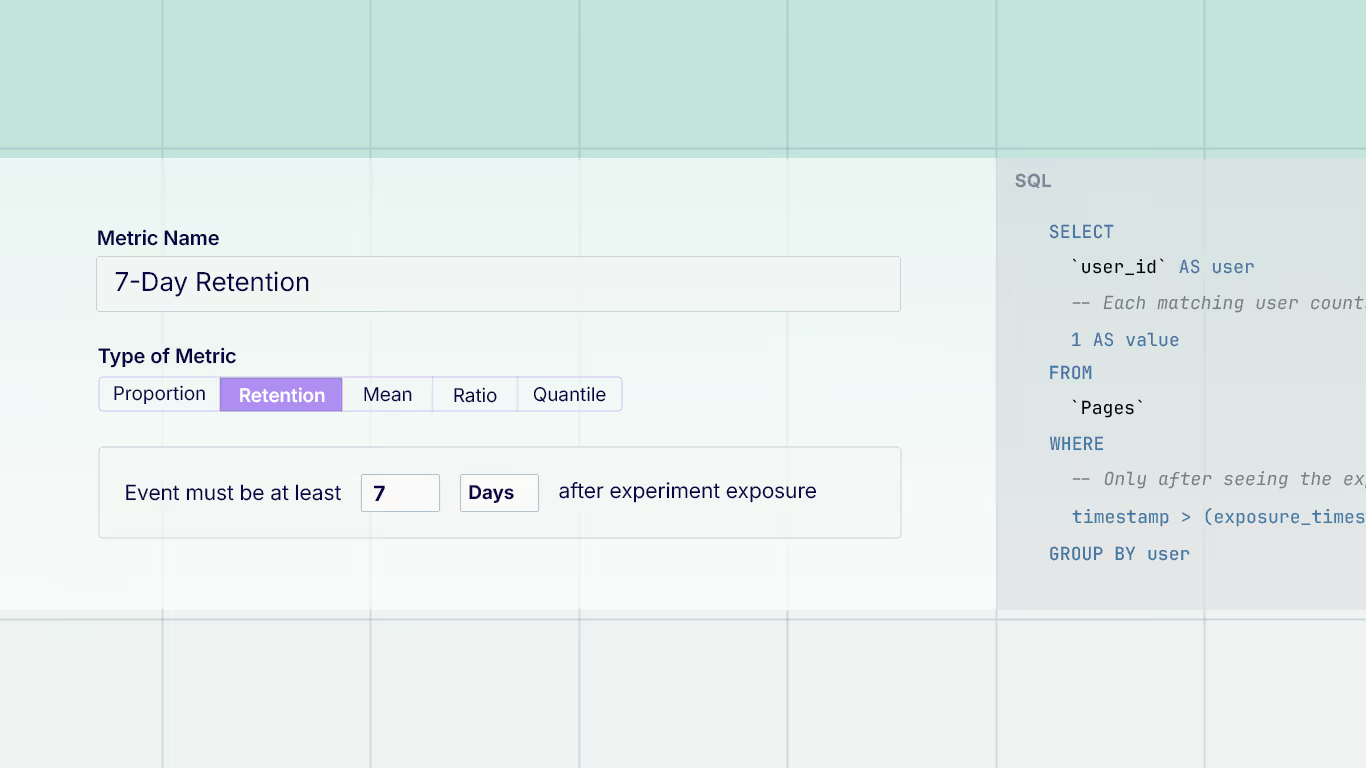
Retention metrics measure how many users return or engage with your product within a defined time frame after being exposed to an experiment. Traditionally, this involves juggling SQL queries and timestamp logic, but GrowthBook removes the friction with an easy-to-use interface.
How It Works:
- Select your core metric (e.g., user logins).
- Specify the time window you want to measure (e.g., 7-14 days post-exposure).
GrowthBook automatically calculates user retention across your experiment variants, helping you understand long-term engagement and whether changes resonate with users.
Example Use Case: Track Week 2 retention rates to determine if a new feature encourages users to return between 7-14 days after release.
Count distinct metrics: track unique interactions without SQL
Count Distinct Metrics lets you measure the number of unique entities (like users, products, or transactions) influenced by an experiment. Tracking unique entities is crucial because it uncovers patterns of diverse engagement and highlights how specific features meaningfully drive user actions. This eliminates manual deduplication and gives you precise data.
Use Cases:
- Unique Videos Watched: Measure the number of distinct videos viewed by each user.
- Unique Products Purchased: Count how many different products a user buys during an experiment.
- Distinct Checkout Sessions: Track diverse payment methods or transaction types.
Why It Matters:
Product teams often focus on driving meaningful interactions, not just volume. Count Distinct provides a deeper understanding of engagement diversity, allowing teams to build features that encourage richer user experiences.
Max metrics: identify peak performance effortlessly
Max metrics capture the highest value achieved by users during an experiment, providing insights into peak-performance behaviors.
Use Cases:
- High Score: Track the top game scores users achieve, regardless of attempts.
- Peak Spending: Identify the highest transaction value for each user.
- Fastest Time: Measure the best completion times for key workflows.
Why it matters:
Peak metrics highlight the outliers and top-performing scenarios that often drive key business outcomes. They’re invaluable for understanding the upper limits of user behavior.
Designed for every team
Retention Metrics are available to Pro and Enterprise customers and are perfect for analyzing long-term engagement trends.
Count Distinct and Max Metrics are available across all GrowthBook organizations, making them accessible whether you’re self-hosted or on a free plan.
Why use these metrics?
By integrating Retention, Count Distinct, and Max metrics into your workflows, you can:
- Measure long-term user engagement without manual SQL.
- Understand unique and diverse user interactions.
- Pinpoint peak performance to identify standout successes.
Ready to level up your experiments?
Explore these new metrics in GrowthBook today and equip your team to make faster, data-driven decisions. It’s about simplifying the complex while getting results that matter.
Related articles


.avif)
Ready to ship faster?
No credit card required. Start with feature flags, experimentation, and product analytics — free.