


See all guests

Guest Spotlight: Andrew Willingham

Andrew Willingham
Atlassian | Exec

About Andrew Willingham

Andrew Willingham is Head of People and Legal Products at Atlassian, where A/B testing helped him turn around an internal talent product. He focuses on applying experimentation discipline to internal tools and employee-facing products, proving that the same testing rigor used on customers can rescue products whose users sit inside the company.

Notable Quotes

"The experiments that were the most helpful were the ones that didn't work."

"I don't know if I'm right or not. I can give you a confidence level, but we'll find out together."

"You need to sit with your actual user and watch them use your product."

"I find that experimentation, whether the culture is really pulling for it or not, it helps manage the politics. It's not opinion-based. It just is what it is."

"When I was coaching my team, I'm less interested in — tell me what features you're going to build. Walk me through your assumptions. What has to be true?"
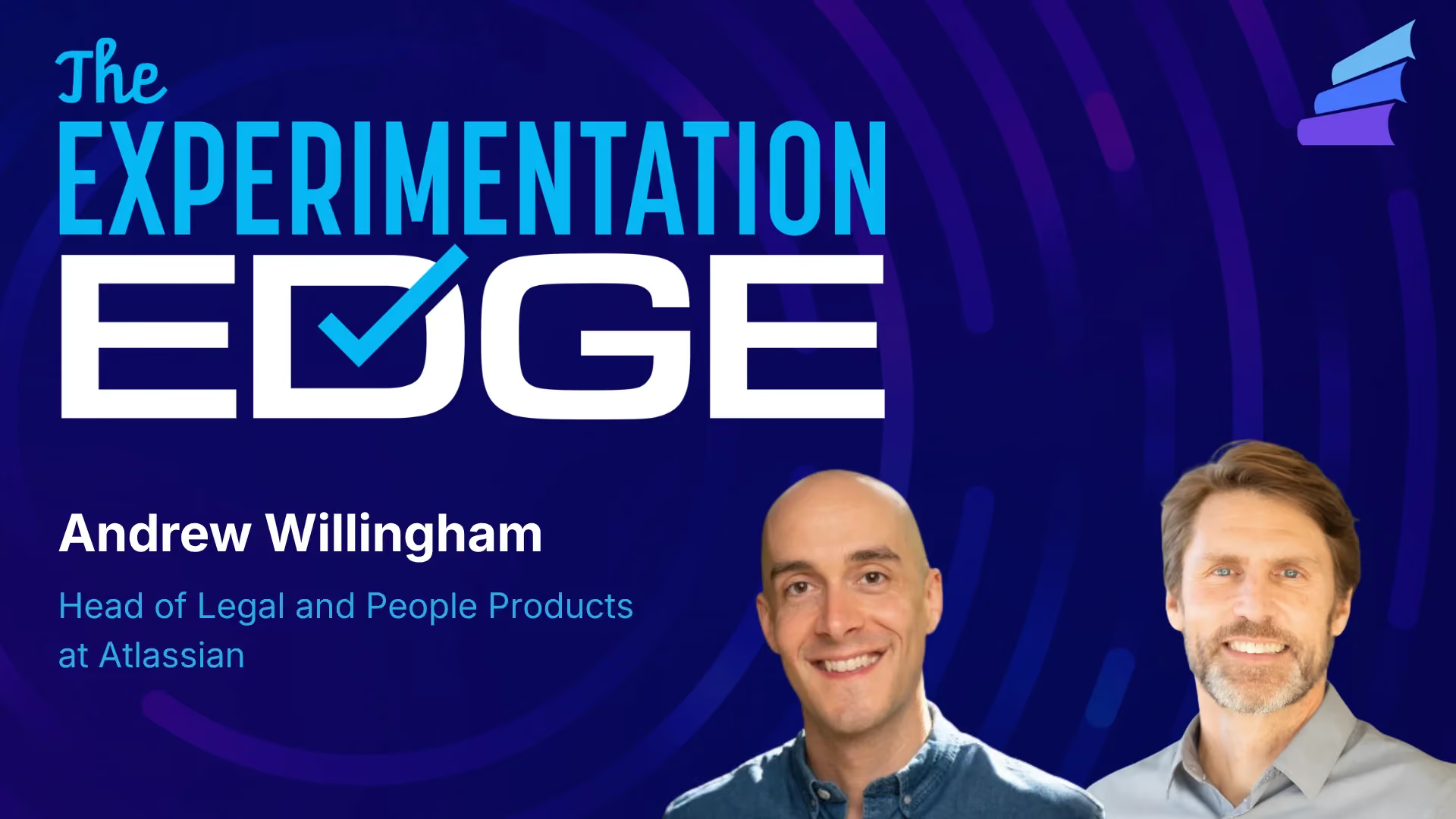
Andrew Willingham
Atlassian | Head of People and Legal Products

Atlassian on the talent product turnaround from A/B testing

Go to S1 | E13

Subscribe to the podcast

Takeaways

All Takeaways

Test metrics before you test features — usage time could signal engagement or just mean your product takes too long to do its job.

Go to S1 | E13

The experiments that fail deliver the most valuable learnings, especially when you expected a slam dunk.

Go to S1 | E13

Experimentation short-circuits political debates by removing opinion from product decisions.

Go to S1 | E13

When you can't test at scale, desk rides replace A/B tests — sitting with users and watching them struggle reveals failures faster than any dashboard.

Go to S1 | E13

Your customer and your user may not be the same person — building for HR specialists instead of the HRBPs who actually run talent reviews resulted in a feature nobody could use.

Go to S1 | E13
The experimentation edge podcast logo with a picture of host Ashley Stirrup
