Best 7 A/B Testing & Experimentation Tools for EdTech

Most A/B testing tools were built for e-commerce teams optimizing checkout flows — not for EdTech teams trying to improve learning outcomes while keeping student data out of third-party servers.
That mismatch creates a real problem when you're evaluating tools: the features that matter most in education (data residency, FERPA compliance, statistical rigor for non-repeatable cohorts) often aren't the ones these platforms lead with.
This guide is written for engineers, product managers, and data teams at EdTech companies who need to run experiments without compromising on student data privacy. Whether you're at a K–12 platform navigating COPPA, a higher-ed tool with institutional procurement requirements, or a fast-growing EdTech startup building your first experimentation program, the tool you pick will shape what you can test, how fast you can move, and what you can actually prove to stakeholders.
Here's what this guide covers:
- GrowthBook — open-source, warehouse-native, self-hostable, built for teams where student data can't leave your own infrastructure
- Optimizely — enterprise-grade marketing experimentation with a large implementation footprint
- PostHog — an analytics-first suite with experimentation bundled in, good for teams consolidating tools
- VWO — a no-code CRO tool for marketing teams optimizing public-facing web pages
- Adobe Target — enterprise personalization tightly coupled to the Adobe Experience Cloud
- ABsmartly — an API-first engine for senior engineering teams running high-volume experimentation programs
- AB Tasty — a marketing-oriented optimization platform positioned between VWO and Optimizely in scope
Each tool is evaluated on the dimensions that actually matter for EdTech: data privacy and deployment model, statistical capabilities, pricing structure, and fit for different team types. By the end, you'll have a clear picture of which tools are worth a closer look for your specific situation — and which ones carry tradeoffs that could slow you down or create compliance headaches later.
GrowthBook
Primarily geared towards: Engineering and product teams at EdTech organizations that need compliant, warehouse-native experimentation without routing student data through third-party vendors.
GrowthBook is a unified open-source platform combining feature flagging, A/B testing, warehouse-native experimentation, metrics and analysis, targeting and segmentation, and SDK integrations — all in a single system rather than assembled from separate tools.
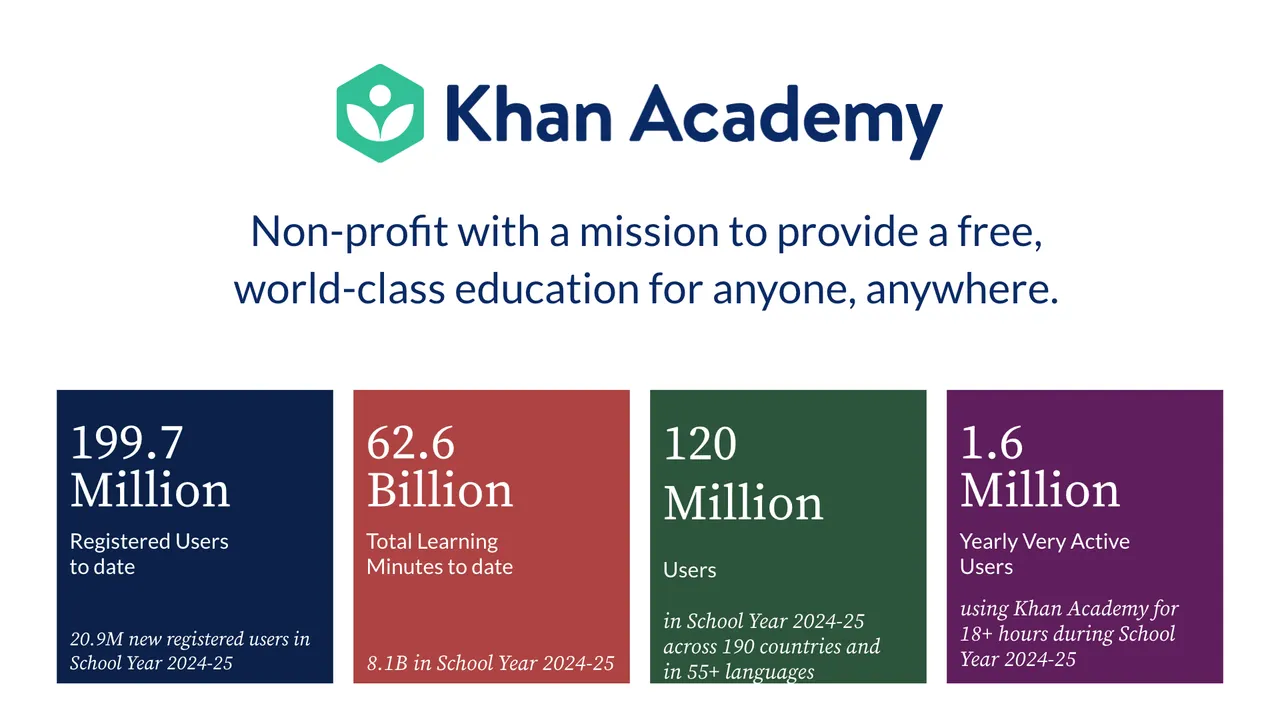
For EdTech teams navigating FERPA, COPPA, or institutional procurement requirements, the warehouse-native architecture means student behavioral data stays in your existing data warehouse — BigQuery, Snowflake, Redshift, and others — and is never transmitted to GrowthBook's servers. John Resig, Chief Software Architect at Khan Academy, put it plainly: "The fact that we could retain ownership of our data was very important. Almost no solution out there allows you to do that."
Notable features:
- Warehouse-native and self-hostable: Experiment analysis runs directly against your existing data warehouse. The platform can also be fully self-hosted, giving K–12 and higher-ed organizations complete control over where experiment data lives — a requirement, not a preference, for many procurement teams.
- Statistical rigor: Bayesian, frequentist, and sequential testing methods are all supported, plus CUPED and post-stratification variance reduction. CUPED reduces noise from pre-existing differences between test groups, allowing EdTech data teams to reach statistically sound conclusions with smaller sample sizes — which matters when running experiments on limited student cohorts.
- Retroactive metric addition: Metrics can be added to completed experiments after the fact, allowing analysts to surface new insights from past tests without re-running them — valuable when student cohort data is time-sensitive or non-repeatable.
- 24+ SDKs with local flag evaluation: SDKs are available for JavaScript, React, Python, Java, Kotlin, iOS, Go, and more. Feature flags are evaluated locally from a JSON file, never in the critical rendering path — keeping load times fast for bandwidth-constrained learners.
- Multi-arm bandits: Traffic is dynamically weighted toward winning variants, useful for EdTech teams optimizing onboarding flows or content recommendations where faster convergence on better experiences matters.
- SOC 2 Type II certified: GrowthBook holds SOC 2 Type II certification, providing an auditable security posture that enterprise EdTech buyers and procurement teams require.
Pricing model: GrowthBook uses per-seat pricing with no experiment caps and no traffic caps, meaning high-traffic EdTech platforms are not penalized for scaling experimentation across millions of student sessions. Specific per-seat pricing is available at growthbook.io/pricing.
Starter tier: GrowthBook offers a free account with unlimited experiments and unlimited traffic — no credit card required.
Key points:
- Student PII never leaves your infrastructure. The warehouse-native model means the platform reads from your data warehouse rather than ingesting raw event data, which directly addresses the data-sharing concerns that disqualify many SaaS-only tools from school and university procurement.
- Self-hosting is a first-class option, not an afterthought — EdTech organizations with strict data residency requirements can run the platform entirely within their own environment.
- Per-seat pricing removes the cost penalty for running more experiments or serving more traffic, which is a meaningful advantage over tools that charge by event volume or monthly tracked users.
- The open-source codebase means teams can audit the platform, contribute, and avoid vendor lock-in — a consideration for institutions with long procurement cycles and multi-year infrastructure commitments.
- A visual editor and URL redirect testing allow non-technical product and marketing teams to run experiments without engineering involvement, while server-side SDKs serve developers running more complex tests.
Optimizely
Primarily geared towards: Marketing and CRO teams at mid-to-large enterprises running UI and content experiments.
Optimizely is an enterprise-grade digital experimentation platform offering A/B testing, multivariate testing, personalization, and feature flagging. It has broad adoption among large organizations and is particularly strong for marketing-led experimentation — think enrollment landing pages, course catalog layouts, and conversion funnel optimization.
That said, it's a substantial platform with a corresponding implementation footprint: setup is typically measured in weeks to months and requires dedicated engineering and marketing resources to operate effectively.
Notable features:
- Visual Experiment Editor: A no-code editor that lets non-technical marketers create and launch web experiments without engineering involvement — useful for EdTech teams iterating on enrollment flows or homepage content independently.
- Multi-Armed Bandit Testing: Supports dynamic traffic allocation to winning variants alongside standard A/B and multivariate tests, which can be valuable for optimizing onboarding experiences across diverse learner segments.
- AI-Driven Experimentation: Generates test variations via AI, provides automated result summaries, and surfaces experiment ideas — reducing analyst overhead for teams without dedicated data science resources.
- Flicker-Free, Edge-Delivered Testing: Processes experiments server-side via a global CDN before page load, avoiding the visual instability that can disrupt learner experiences on content-heavy platforms.
- Custom Metrics and Scorecards: Teams can define non-standard conversion metrics — relevant for EdTech use cases like course completion rates, quiz engagement, or lesson progression — and analyze results through detailed experiment scorecards.
Pricing model: Optimizely uses traffic-based (Monthly Active Users) pricing with modular add-ons; specific pricing is not published publicly and requires going through a sales process. For EdTech platforms with large student user bases, MAU-based pricing can escalate significantly and may constrain how frequently teams choose to run experiments.
Starter tier: There is no free tier.
Key points:
- Cloud-only deployment is a meaningful constraint for EdTech: Optimizely has no self-hosting option, which means student behavioral data must be sent to Optimizely's servers. For organizations subject to FERPA, COPPA, or institutional data governance policies, this is a structural compliance concern worth evaluating carefully before committing. A warehouse-native experiment approach, by contrast, can be fully self-hosted, keeping all data within your own infrastructure.
- Separate client-side and server-side systems add operational complexity: Optimizely's client-side and server-side experimentation capabilities live in distinct systems, which increases integration overhead for EdTech engineering teams who need to run experiments across web, mobile, and backend layers simultaneously.
- Pricing opacity and traffic-based scaling: Because pricing isn't published and scales with MAUs, it's difficult to forecast costs during evaluation — and EdTech platforms with millions of students may find the cost ceiling limits experimentation breadth. A per-seat pricing model includes unlimited tests and traffic, making cost predictable regardless of audience size.
- Strong fit for marketing-led testing, narrower fit for product and data teams: Optimizely's tooling and design philosophy centers on marketing and CRO use cases. EdTech engineering or data teams looking for full-stack, server-side experimentation with deep statistical control, SQL transparency, or warehouse-native analysis will likely find the platform less well-suited to their workflows.
PostHog
Primarily geared towards: Engineering and product teams at small-to-mid-sized EdTech companies that want a single platform covering analytics, A/B testing, feature flags, and session recording.
PostHog is an open-source product analytics suite that bundles experimentation capabilities alongside session recording, feature flags, and event tracking — all in one platform. Rather than a dedicated A/B testing tool, it's designed for teams that want to reduce tool sprawl by consolidating their analytics and experimentation workflows in a single place.
For EdTech teams, its most meaningful differentiator is the option to self-host, which allows student event data to remain entirely on your own infrastructure — a real consideration when navigating FERPA or COPPA compliance requirements.
Notable features:
- Self-hosting option: PostHog can be deployed on your own infrastructure, giving EdTech organizations direct control over where student data lives. Note that this requires managing the full PostHog analytics stack, which carries meaningful operational overhead for your engineering team.
- Bayesian and frequentist statistical engines: PostHog's Experiments feature supports both statistical approaches, providing defensible results for tests on funnels, single events, or ratio metrics — useful when testing enrollment flows or learning feature adoption.
- Unlimited metrics per experiment: Teams can track unlimited metrics per experiment to observe downstream effects on engagement, completion rates, or retention alongside primary conversion goals.
- Feature flags integrated with experiments: Feature flags are built into the same platform, enabling controlled rollouts to specific student cohorts — helpful when gradually releasing new curriculum tools or onboarding flows.
- Mobile SDK support: PostHog supports iOS, Android, React Native, and Flutter, making it viable for EdTech teams building mobile learning experiences.
Pricing model: PostHog uses usage-based pricing tied to event volume and feature flag requests, meaning costs scale as your product grows. Exact paid tier names and price points should be verified directly on PostHog's pricing page before making purchasing decisions.
Starter tier: PostHog offers a free, open-source tier with no per-seat charges — making it accessible for smaller EdTech teams getting started with experimentation.
Key points:
- PostHog is an analytics-first platform with experimentation added on — it works well for teams running occasional A/B tests within a broader analytics workflow, but is not purpose-built for high-velocity experimentation programs. Teams scaling a dedicated experimentation culture may find it limiting over time.
- Unlike warehouse-native platforms, PostHog calculates experiment metrics inside its own platform rather than in your existing data warehouse. Teams that already use a warehouse often end up duplicating data in PostHog, which increases both cost and complexity.
- Documented experimentation capabilities do not include sequential testing, CUPED (variance reduction), or built-in automated Sample Ratio Mismatch (SRM) detection — advanced statistical safeguards that matter for teams running rigorous experiments at scale. For teams running occasional tests, these gaps may not matter; for teams building a serious experimentation program, they add up.
- The self-hosting advantage is real, but comes with a tradeoff: your team is responsible for maintaining the entire PostHog infrastructure. By contrast, a warehouse-native approach keeps student data inside your existing institutional infrastructure without requiring you to operate a separate analytics stack.
- Event-based pricing can become expensive as product usage grows, particularly for EdTech platforms with large student populations generating high event volumes.
VWO (Visual Website Optimizer)
Primarily geared towards: EdTech marketing and CRO teams optimizing public-facing web properties without engineering support.
VWO is a conversion rate optimization platform built primarily for marketing and growth teams who need to run A/B tests and analyze user behavior on websites without writing code. Made by Wingify, it targets SMB to mid-market companies (roughly 50–5,000 employees) and positions itself as an all-in-one tool for improving enrollment funnels, landing pages, and lead generation flows.
For EdTech teams, the most practical use case is optimizing public-facing pages — course catalogs, pricing pages, and signup flows — where marketing owns the testing roadmap and engineering bandwidth is limited.
Notable features:
- Visual editor: A no-code interface that lets marketers create and deploy A/B tests on web pages by pointing and clicking, without touching the codebase.
- Heatmaps and session recordings: Qualitative tools that show where users click, scroll, and drop off — useful for diagnosing friction in enrollment or onboarding flows.
- Funnel analysis: Tracks user journeys across multi-step conversion paths, such as landing page → course page → checkout → registration.
- Multivariate testing: Tests multiple combinations of page elements simultaneously, helpful for EdTech teams iterating on headlines, CTAs, and pricing displays at once.
- Personalization: Delivers different experiences to audience segments based on geography, device, or behavioral data.
- Server-side and full-stack testing: VWO does offer back-end and API-level experimentation, though the maturity and ease of operationalizing these capabilities has been questioned — verify current state directly with VWO if this is a requirement.
Pricing model: VWO uses MAU-based (Monthly Active Users) pricing with modular add-ons and tiered plans — specific tier names and dollar amounts are not publicly disclosed and require contacting VWO directly. Pricing has been characterized as unpredictable at scale, with steep overage fees for exceeding annual user caps.
Starter tier: VWO offers a 30-day free trial; no permanent free tier has been confirmed.
Key points:
- Cloud-only deployment is a meaningful constraint for EdTech: VWO stores data on third-party cloud servers (Google Cloud Platform) with no self-hosting option. For organizations handling student data under FERPA or COPPA, this requires careful configuration to prevent PII transfer and may introduce compliance risk that needs legal review before adoption.
- Strong fit for marketing, limited fit for product engineering: VWO's toolset is well-suited for CRO on public-facing web properties, but teams needing server-side, mobile, or full-stack experimentation across a learning platform will find the capabilities harder to operationalize — and the statistical methods are limited to frequentist approaches only, without support for Bayesian analysis, sequential testing, or variance reduction techniques like CUPED.
- Cost can escalate quickly: The MAU-based model with overage fees means costs are tied to traffic volume rather than usage, which can make budgeting unpredictable for EdTech platforms with seasonal enrollment spikes or growing user bases.
- No EdTech-specific case studies or compliance certifications were found in available research — teams with strict student data privacy requirements should conduct their own due diligence before committing.
Adobe Target
Primarily geared towards: Enterprise marketing and analytics teams already embedded in the Adobe Experience Cloud ecosystem.
Adobe Target is Adobe's enterprise personalization and A/B testing platform, built as one component of the broader Adobe Experience Cloud suite. It's designed for large organizations running marketing-led experimentation — think landing pages, enrollment funnels, and content personalization — rather than product or engineering-driven feature testing.
For EdTech organizations already invested in Adobe Analytics, Adobe Experience Manager, or the wider Adobe stack, Target offers deep native integration across those tools. For everyone else, the barriers to entry are steep.
Notable features:
- A/B and multivariate testing for web UI workflows, including enrollment flows, course landing pages, and content layout variations.
- Visual editing tools that allow marketing teams to test UI changes without code — though users report a notable learning curve before the tooling becomes productive.
- AI-driven personalization for delivering differentiated experiences to different learner segments at scale across large platforms.
- Server-side and multi-surface experimentation support, though this requires meaningful additional implementation and ongoing monitoring effort.
- Deep Adobe ecosystem integration with Adobe Analytics, Adobe Experience Manager, Adobe Experience Platform, and Adobe Tags — including the ability to export AEM content variations directly into Target as test offers.
Pricing model: Adobe Target is premium enterprise software with no publicly listed pricing tiers. Costs are reported to start in the six-figure range annually and can exceed $1M per year at scale, with usage-based pricing that grows with traffic. Notably, experiment analysis requires Adobe Analytics, which is a separate product purchase — not bundled with Target.
Starter tier: No free tier or entry-level starter plan has been identified; Adobe Target is sold through enterprise sales engagements.
Key points:
- Data privacy and deployment constraints matter for EdTech: Adobe Target is cloud-only, meaning student data flows through Adobe-managed infrastructure. For EdTech organizations subject to FERPA, COPPA, or institutional data governance policies, this is a meaningful compliance consideration worth raising explicitly with Adobe before committing.
- Statistical transparency is limited: Adobe Target uses proprietary, black-box statistical models. For EdTech teams that need to present experiment results to academic leadership, institutional review boards, or compliance stakeholders, the inability to audit or explain the underlying methodology is a real operational risk.
- Setup timelines are long: Implementation typically takes weeks to months, requiring a team that includes dedicated developers, analysts, and Adobe specialists — a significant constraint for EdTech organizations with lean technical teams or those that need to move quickly on experimentation programs.
- Vendor lock-in is high: Adobe Target is tightly coupled to the Adobe Experience Cloud. Teams not already using Adobe Analytics and related Adobe products will face mandatory additional purchases and infrastructure dependencies to run experiments end-to-end.
- Compared to a warehouse-native alternative: A warehouse-native experiment platform can be set up in hours rather than months, supports self-hosted deployment so student PII never leaves your own servers, uses transparent Bayesian and frequentist statistical methods, and doesn't require purchasing additional analytics infrastructure to analyze results. For EdTech teams outside the Adobe ecosystem, the total cost of ownership difference is substantial.
ABsmartly
Primarily geared towards: Senior engineering and data teams at mid-to-large EdTech organizations with established, high-volume experimentation programs.
ABsmartly is an API-first, code-driven experimentation platform built for engineering teams that want to embed A/B testing deeply into complex technical infrastructure — think microservices, ML models, recommendation engines, and adaptive learning systems. It's designed for organizations that have already moved past the basics of experimentation and need a purpose-built engine to support serious scale.
There is no visual editor or no-code workflow; launching and managing experiments requires engineers throughout.
Notable features:
- Group Sequential Testing (GST) engine: ABsmartly's testing engine is designed to let you stop an experiment early and call a winner as soon as results are statistically clear — rather than waiting until a pre-set end date regardless of what the data shows. This can reduce the time needed to run a test before acting on results. ABsmartly describes this as meaningfully faster than standard fixed-duration approaches, though this is a vendor claim without independent verification.
- Bayesian and frequentist methods with CUPED: Supports both statistical frameworks plus CUPED variance reduction, giving data teams flexibility in how they analyze experiment results.
- Interaction detection: Described as comprehensive factorial-style detection across concurrent tests — relevant for EdTech platforms running simultaneous experiments across course pages, onboarding, and recommendation systems.
- On-premises and private cloud deployment: ABsmartly can be deployed outside of a shared cloud environment, which matters for EdTech organizations with student data residency requirements. Buyers should independently verify the exact data handling model and confirm any relevant compliance certifications, including FERPA, SOC 2, or HIPAA, directly with ABsmartly.
- Unlimited experiments, users, and goals: No hard caps on experiment volume or goal-setting, which supports scaling an experimentation program without hitting platform-imposed limits.
- Real-time reporting with unrestricted segmentation: Live results with no limits on how you slice data — useful for analyzing learner cohorts, device types, or course categories without custom reporting workarounds.
Pricing model: ABsmartly uses enterprise, event-based pricing — meaning costs scale with the volume of events tracked. Pricing starts at approximately $60,000/year according to available competitive research, though this figure should be verified directly with ABsmartly before making purchasing decisions.
Starter tier: There is no free tier or trial plan; ABsmartly is enterprise-only.
Key points:
- The event-based pricing model structurally increases costs as experimentation volume grows, which can discourage teams from running experiments broadly — the opposite of what most EdTech organizations want when building an experimentation culture.
- ABsmartly is engineer-only by design: there is no visual editor, no URL redirect testing, and no support for non-technical stakeholders like product managers or curriculum designers who may want to run experiments independently.
- Analysis runs inside ABsmartly's own platform rather than directly in your data warehouse, which means student data flows through a third-party system — a consideration for EdTech teams with strict data governance requirements.
- No independent third-party reviews or EdTech-specific case studies were found during research, making it difficult to assess real-world performance in educational product contexts.
- Setup is measured in days to weeks rather than hours, which is worth factoring in if your team is under pressure to move quickly.
AB Tasty
Primarily geared towards: Marketing and growth teams focused on conversion rate optimization for web and mobile funnels.
AB Tasty is a digital experience optimization platform built around client-side A/B testing, multivariate testing, and personalization. It's designed primarily for marketing teams rather than engineering or product teams, with a visual editor that lets non-technical users build and launch experiments without developer involvement.
The platform sits roughly between lightweight tools like VWO and full enterprise platforms like Optimizely in terms of scope and complexity.
Notable features:
- Visual editor (no-code/low-code): Build and modify test variations directly in the browser without writing code — useful for EdTech marketing teams running enrollment funnel and landing page tests without engineering support.
- Web and feature experimentation: Supports A/B, split URL, multivariate, and multi-page tests on web, plus SDK-based feature experimentation across mobile and connected devices.
- Dynamic Allocation: AI-driven traffic weighting that automatically shifts visitors toward winning variations during a running test.
- Bayesian statistical engine: Produces probabilistic results that can be more intuitive for non-statistician teams making optimization decisions.
- EmotionsAI and personalization: Advanced segmentation based on visitor emotional state or brand engagement, enabling personalized experiences at scale.
- Third-party analytics integrations: Sends experiment data to GA4, Mixpanel, Heap, and other tools; accepts cohorts from CDPs and data lakes.
Pricing model: AB Tasty uses custom pricing only — no tiers or price points are publicly listed. Pricing is available on request via a demo or sales contact.
Starter tier: There is no free tier; all access requires a paid contract.
Key points:
- AB Tasty is cloud-only with no self-hosted deployment option, which is a meaningful consideration for EdTech organizations handling student data under FERPA or COPPA — data residency and third-party sharing restrictions may apply, and there is no way to keep data within your own infrastructure.
- The platform is built around marketing-side conversion optimization; server-side and full-stack experimentation are limited, making it less suited for product teams running experiments on core learning features or backend logic.
- Statistical analysis is Bayesian only — teams that need frequentist, sequential, or CUPED-adjusted analysis will need to look elsewhere.
- No transparent, auditable reporting layer — experiment calculations are not reproducible outside the platform's own interface.
- Customer references and case studies in available research are drawn from e-commerce contexts, not EdTech — teams should verify whether the platform has meaningful experience with education-specific use cases before committing.
Deployment model, not features, is the real filter for EdTech experimentation tools
The core tension running through every tool reviewed here is the same: most experimentation platforms were designed for teams where data privacy is a configuration option, not a structural requirement. In EdTech, it's the other way around.
The deployment model — cloud-only versus self-hosted versus warehouse-native — isn't a preference you can revisit later. It shapes what you can legally do with student data from day one, and it will determine whether your tool survives procurement review at a school district or university.
Before evaluating features, EdTech teams should answer one question: can this tool keep student data entirely within our own infrastructure? For organizations subject to FERPA, COPPA, or institutional data governance policies, a cloud-only tool that requires routing behavioral data through a third-party vendor may not clear procurement review regardless of how good its visual editor is.
That single filter eliminates most of the tools on this list for many EdTech buyers — and it's worth applying it first.
Side-by-side comparison: EdTech experimentation tools at a glance
Where cloud-only deployment ends the conversation for FERPA-constrained teams
Five of the seven tools reviewed here — Optimizely, VWO, Adobe Target, AB Tasty, and PostHog's cloud tier — are cloud-only or default-cloud platforms. For EdTech organizations where student data cannot leave institutional infrastructure, this is a structural disqualifier, not a configuration problem. No amount of DPA negotiation or privacy configuration fully substitutes for keeping data within your own environment.
That leaves GrowthBook, PostHog (self-hosted), and ABsmartly as the options worth evaluating for teams with strict data residency requirements. Among those three, the distinctions matter:
- PostHog self-hosted gives you control over student data but requires your team to operate the full analytics stack — a meaningful operational burden.
- ABsmartly offers on-premises deployment but uses event-based pricing that discourages high-volume experimentation, and analysis runs inside ABsmartly's own platform rather than your warehouse.
- GrowthBook is warehouse-native by architecture, meaning experiment analysis runs directly against your existing data warehouse without duplicating data or operating a separate analytics system. It can also be fully self-hosted, and its open-source codebase is publicly auditable.
For teams that don't have strict data residency requirements, the decision shifts to team type and use case. Marketing teams optimizing enrollment funnels and landing pages will find VWO, AB Tasty, or Optimizely's visual editor workflows more accessible. Engineering teams running product experiments across web, mobile, and backend systems need full-stack coverage and statistical depth that most marketing-oriented tools don't provide.
Our recommendation: why GrowthBook is built for EdTech experimentation
GrowthBook is the only platform reviewed here that combines warehouse-native experimentation, full self-hosting, open-source auditability, SOC 2 Type II certification, and per-seat pricing with no traffic caps — in a single unified platform. For EdTech teams, that combination addresses the compliance, cost, and technical requirements that disqualify most alternatives before feature evaluation even begins.
Khan Academy's Chief Software Architect chose it specifically because data ownership was non-negotiable. Lingokids uses it to launch experiments without code changes or app releases. The platform is built to serve both the engineer who needs server-side SDK integration and the product manager who wants to run a URL redirect test without filing a ticket.
The experimentation capabilities go beyond basic A/B testing: Bayesian and frequentist statistical engines, sequential testing, CUPED variance reduction, multi-arm bandits, retroactive metric addition, and a learning library that captures institutional knowledge from past experiments. For EdTech teams trying to prove the impact of curriculum changes, onboarding improvements, or AI-driven recommendations to academic leadership or institutional stakeholders, that statistical depth matters.
Starting points based on where your experimentation program actually is
The right starting point depends on where your team is in the experimentation maturity curve — not just which tool has the most features.
If you're just getting started and need to validate your setup before committing to a platform, run an A/A test first. An A/A test is identical to an A/B test but with no actual difference between variants — it confirms your traffic splitting is working correctly and your statistical implementation is sound before you draw any real conclusions from experiments.
If your team is in the early stages of building an experimentation program — running one to four tests per month — prioritize getting the deployment model right over optimizing for feature depth. A tool that keeps student data in your infrastructure and integrates with your existing event tracking is more valuable at this stage than one with advanced statistical capabilities you won't use yet.
If you're scaling toward a higher-velocity program — five or more concurrent experiments, multiple teams running tests independently — you need a platform where non-engineers can launch experiments without developer involvement, where metrics can be defined in SQL against your existing warehouse, and where results are transparent enough to defend to stakeholders. GrowthBook supports all of these natively if you're not already using a platform that does.
If you're at an institution with formal procurement requirements, start the compliance conversation before the feature evaluation. Confirm deployment model, data residency, SOC 2 or equivalent certification, and FERPA/COPPA handling with any vendor before investing time in a technical evaluation. Most cloud-only tools will not clear institutional procurement for K–12 or higher-ed buyers without significant legal review — and some won't clear it at all.
The best A/B testing and experimentation tool for EdTech is the one your team will actually use, that keeps student data where it belongs, and that gives you results you can trust and explain. Start there.
Related reading
Related Articles
Ready to ship faster?
No credit card required. Start with feature flags, experimentation, and product analytics—free.