Best 7 A/B Testing & Experimentation Tools for SaaS Companies

Picking the wrong A/B testing tool doesn't just waste budget — it shapes how your entire team thinks about experimentation.
A marketing-first platform handed to an engineering team creates friction at every step. A developer-focused tool dropped in front of a CRO team stalls programs before they start. The best A/B testing and experimentation tools for SaaS companies aren't the ones with the longest feature lists — they're the ones built for how your specific team actually works.
This guide is written for engineers, product managers, and data teams at SaaS companies who are evaluating their options seriously. Whether you're setting up your first experiment or replacing a tool that's become too expensive or too limited, here's what you'll find inside:
- GrowthBook — open-source, warehouse-native, built for teams that want full data control
- Optimizely — enterprise-grade, marketing-oriented, with broad personalization features
- LaunchDarkly — feature flag-first, with experimentation as a paid add-on
- PostHog — an all-in-one analytics platform with built-in A/B testing
- Statsig — engineering-built, statistically rigorous, recently acquired by OpenAI
- Adobe Target — enterprise personalization tied tightly to the Adobe ecosystem
- VWO — no-code CRO platform built for marketing teams
Each tool is covered with the same structure: who it's actually built for, what its notable features are, how it prices, and where its real limitations show up. No filler, no vendor spin — just the information you need to make a confident decision.
GrowthBook: Best open-source A/B testing & experimentation platform for SaaS teams
Primarily geared towards: Engineering and product teams at SaaS companies who want to run rigorous experiments on top of their existing data warehouse, without paying for a separate data pipeline or vendor lock-in.
GrowthBook is an open-source feature flagging and A/B testing platform built for teams that want to own their experiment data end-to-end. Rather than routing your event data through a proprietary pipeline, GrowthBook connects directly to the data warehouse you already use — Snowflake, BigQuery, Redshift, Postgres, and others — so there's no duplicate data cost and no PII leaving your infrastructure.
The platform was part of Y Combinator's W22 batch and was built by founders who spent a decade shipping product at an ed-tech company before deciding to solve this problem properly. Today, over 2,700 companies use GrowthBook, and the platform handles 100 billion+ feature flag lookups per day with 99.9999% infrastructure uptime.
Notable features:
- Warehouse-native architecture: Experiments run against your existing data warehouse. No third-party data pipeline required, no vendor lock-in, and full control over your data — a core architectural decision, not a bolt-on.
- Multiple experiment types: Linked Feature Flags (server-side, code-based), Visual Editor (no-code UI changes), and URL Redirects (no-code, for landing pages and marketing flows) — so both developers and non-technical teammates can run experiments independently.
- Flexible statistical engines: Supports Bayesian, frequentist, and sequential testing methods, with CUPED variance reduction — a technique that reduces the amount of traffic you need to reach a reliable result. Teams can match the statistical approach to their specific question rather than being locked into one method.
- Retroactive metric addition: Metrics can be added to past experiments after the fact, pulling new insights from historical data without re-running a test. As one customer put it, "this was simply never possible before."
- Lightweight SDKs (24+): Feature flags are evaluated locally from a JSON payload — no blocking network calls in your critical rendering path. Supports JavaScript, React, Python, Go, Swift, Kotlin, and more, including SSR frameworks like Next.js. The JS SDK is 9kb — less than half the size of the closest competitors.
- Multi-arm bandits: Dynamically shift traffic toward winning variants mid-experiment, useful when you want to reduce exposure to underperforming variants without waiting for a full test to conclude.
Pricing model: GrowthBook uses per-seat pricing with unlimited experiments and unlimited traffic across all tiers, including a fully self-hosted option for teams with strict data residency or compliance requirements (SOC 2 Type II, HIPAA, GDPR, CCPA compliant). A free tier is available with no credit card required — verify current seat and feature limits at growthbook.io/pricing, as specifics may have changed.
Key points:
- The warehouse-native approach means you're not paying twice to capture the same data — if you already have Snowflake or BigQuery, the platform plugs into it directly rather than requiring a parallel data stream.
- Self-hosting is a first-class option, not an afterthought — including air-gapped deployment for teams in regulated industries like healthcare, fintech, or education.
- The open-source codebase (available on GitHub) means you can audit the statistics engine, contribute, or fork — a meaningful trust signal for developer-led teams who've been burned by black-box platforms before.
- The platform scales with experimentation maturity — designed to support teams running a handful of tests per month all the way up to organizations running thousands, without a pricing model that penalizes volume.
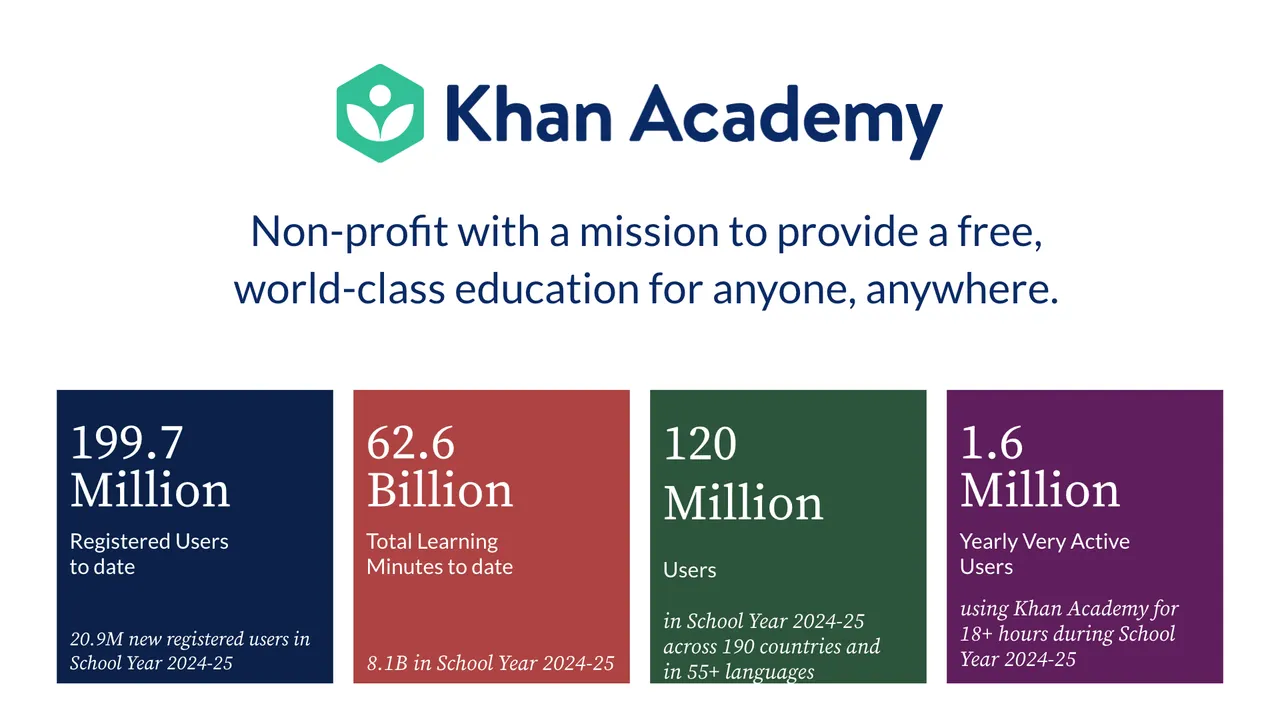
- John Resig, Chief Software Architect at Khan Academy, noted: "We didn't have a fraction of the features that we have now. GrowthBook is much better and more cost effective" — a credible signal for teams evaluating the platform against more established enterprise tools.
Optimizely
Primarily geared towards: Enterprise marketing and CRO teams running large-scale web experimentation and personalization programs.
Optimizely is one of the longest-standing names in A/B testing, originally built as a self-serve startup before pivoting hard toward enterprise in the mid-2010s. It was acquired by Episerver in 2020 and has since expanded into a broad "digital experience platform" that combines experimentation, content management, and AI-driven personalization.
Today, it's best understood as an enterprise suite rather than a standalone testing tool — powerful in scope, but built primarily for marketing and CRO teams rather than developer or product-led organizations.
Notable features:
- Flicker-free web experimentation: Tests are processed at the edge via CDN before the page loads, avoiding the visual flash common in client-side testing tools — relevant for SaaS teams running experiments on marketing sites or web apps.
- Opal AI assistance: AI tooling that generates test variations, summarizes results, surfaces experiment ideas, and can dynamically shift traffic toward winning variations (multi-armed bandit behavior).
- Multiple test types: Supports A/B, multivariate, and multi-armed bandit testing, giving teams flexibility beyond simple two-variant experiments.
- Stats Engine with sequential testing: Optimizely's proprietary statistical engine supports sequential testing and sample ratio mismatch (SRM) checks. Note: it does not offer Bayesian methods or CUPED/post-stratification natively.
- Experiment collaboration hub: Shared brainstorming boards, experiment calendars, idea prioritization, and shareable results — designed to support cross-functional teams managing high volumes of experiments.
- Content orchestration integration: Deep ties to CMS and campaign tooling within the broader Optimizely platform, making it relevant for enterprise teams running content-driven experimentation at scale.
Pricing model: Optimizely uses a traffic-based (MAU) pricing model with modular packaging, meaning additional use cases typically require purchasing separate modules — costs can scale significantly as traffic and program scope grow. Exact pricing is not publicly listed and requires a sales conversation. No free tier is available; access requires a sales-led engagement with pricing available on request.
Key points:
- Optimizely is primarily designed for marketing and CRO teams, not developer or product teams — if your experimentation program lives in engineering or product, the tool's workflow assumptions may not align well with how your team operates.
- The platform's breadth comes with real operational complexity; implementation typically takes weeks to months and often requires dedicated support resources, which adds to total cost beyond licensing.
- Traffic-based pricing means your experimentation costs grow with your user base — teams running high-traffic programs or wanting to run many concurrent experiments may find this model constraining relative to per-seat or flat-rate alternatives.
- Optimizely's client-side and server-side experimentation systems are separate, which can make it harder to measure the combined impact of experiments running across different surfaces.
- The analytics model is closed — experiment data and history are locked inside the platform, which limits transparency into how results are calculated and makes it difficult to connect experiment outcomes to your existing data warehouse workflows.
LaunchDarkly
Primarily geared towards: Engineering and DevOps teams at mid-to-large SaaS companies focused on controlled feature releases and deployment safety.
LaunchDarkly is a feature flag management and release control platform that has expanded to include experimentation capabilities. Its core value proposition is giving engineering teams runtime control over features — enabling progressive rollouts, instant rollbacks, and release observability without redeployment.
Experimentation exists in LaunchDarkly, but it's architecturally secondary: it's built on top of the feature flagging system and sold as a paid add-on rather than a first-class product. Teams evaluating it primarily as an A/B testing tool should factor that in early.
Notable features:
- Flag-native experimentation: Experiments are designed and run within the same workflow used to ship features, reducing context-switching for engineering teams but tying experimentation tightly to the release management layer.
- Targeting and segmentation: Supports advanced user targeting by attributes, cohorts, geography, device type, and custom segments, with progressive rollout controls built in.
- Statistical methods: Supports both Bayesian and Frequentist approaches, sequential testing, and CUPED variance reduction — though some advanced capabilities (such as percentile analysis) are reported to be in beta.
- Multi-armed bandit experiments: Supports adaptive traffic weighting toward winning variants during an experiment, useful for optimizing while still in test.
- Guarded releases and observability: Includes performance thresholds, error monitoring, automated rollback, and session replay under its "Guarded Release" product — a strong differentiator for teams prioritizing deployment safety.
- AI feature management: Offers tooling for managing AI prompts and model configurations with guarded rollouts, and supports experimentation on AI-powered features — though some AI tooling (MCP server, Agent Skills) was still in beta at time of research.
Pricing model: LaunchDarkly prices based on Monthly Active Users (MAU), seat count, and service connections. Experimentation is a paid add-on and is not included in the base feature flag plan, so costs can grow meaningfully as testing needs scale. A free trial is available on launchdarkly.com, though specific limits on MAU, features, or duration are not publicly detailed — check the pricing page directly for current terms.
Key points:
- Experimentation is an add-on, not core: Unlike platforms purpose-built for A/B testing, LaunchDarkly's experimentation layer sits on top of its feature flag infrastructure and requires a separate purchase. Teams running high-volume testing programs may find this limiting both functionally and financially.
- Warehouse-native support is narrow: LaunchDarkly's warehouse-native experimentation is currently limited to Snowflake and requires elevated account permissions to configure — a constraint for teams using BigQuery, Redshift, or other data warehouses.
- Cloud-only deployment: LaunchDarkly has no self-hosted option, which matters for teams with data residency requirements, strict compliance environments, or a preference for keeping data in their own infrastructure.
- Strong fit for release-first teams, weaker for experiment-first teams: If your primary need is safe, observable feature delivery with experimentation as a secondary workflow, LaunchDarkly is a capable platform. If experimentation is the primary use case, the add-on model and architectural constraints are worth weighing carefully against purpose-built alternatives.
- Enterprise scale is real: LaunchDarkly reports 45 trillion daily flag evaluations and sub-200ms flag updates — for large engineering organizations, the platform's reliability and scale credentials are well-established.
PostHog
Primarily geared towards: Early-to-mid stage SaaS product and engineering teams who want analytics, session recording, feature flags, and A/B testing consolidated in a single platform.
PostHog is an open-source, all-in-one product intelligence platform that bundles product analytics, session recording, feature flags, and experimentation under one roof. Its experimentation feature — called Experiments — supports both A/B and multivariate tests using Bayesian and frequentist statistical engines, and can measure results against funnel metrics, single events, or ratio metrics.
PostHog is built around an analytics-first workflow, meaning experimentation is a capable but secondary feature rather than the platform's core design priority. Teams that want to reduce tool sprawl and don't yet need a dedicated experimentation program will find the most value here.
Notable features:
- Experiments (A/B testing): Supports A/B and multivariate tests with both Bayesian and frequentist statistical methods, measurable against funnels, events, or ratio metrics.
- Feature flags: Natively integrated with experiments, enabling controlled rollouts and gradual exposure tied directly to experiment measurement.
- Integrated product analytics: Experiment results live alongside full product analytics in the same platform, reducing context-switching for smaller teams.
- Session recording: Qualitative session replay is included in the same product, giving teams behavioral context alongside quantitative experiment data.
- Open-source and self-hosting: PostHog can be self-hosted, which appeals to teams with data residency or privacy requirements.
Pricing model: PostHog uses usage-based pricing tied to event volume and feature flag requests, meaning platform costs scale as your product grows. A free tier is available for teams getting started, though exact event volume caps and feature restrictions should be confirmed directly on their pricing page before making purchasing decisions.
Key points:
- PostHog is an analytics-first platform — experimentation is included as part of a broader product suite, not as a standalone discipline. Teams running occasional tests alongside analytics workflows will find it sufficient; teams building a high-velocity experimentation program may find it limiting.
- The platform lacks several advanced statistical capabilities that purpose-built experimentation tools offer: there is no documented support for sequential testing, CUPED variance reduction, or automated Sample Ratio Mismatch (SRM) detection.
- PostHog calculates experiment metrics inside its own platform rather than connecting to your existing data warehouse. For teams already storing product data in Snowflake, BigQuery, or Redshift, this means sending the same events to two separate systems — paying to store and process the same data twice, which adds both cost and operational overhead at scale.
- Event-volume-based pricing can become expensive as usage grows, particularly for teams that also maintain a separate data warehouse for other analytics use cases.
- The open-source, self-hosted option is a genuine differentiator for teams with strict data ownership requirements, though it requires hosting and maintaining the full PostHog analytics stack.
Statsig
Primarily geared towards: Growth-stage to enterprise SaaS engineering and product teams running high-volume experimentation programs.
Statsig was built by engineers from Meta, where large-scale experimentation infrastructure was a core part of how products were developed. That pedigree shows in the platform's statistical rigor and infrastructure reliability — Statsig processes over 1 trillion events daily and counts Notion, Atlassian, and Brex among its customers.
In 2025, Statsig was acquired by OpenAI, which is worth factoring into any long-term platform evaluation, as the acquisition introduces some uncertainty around independent product direction.
Notable features:
- CUPED + sequential testing included by default: Variance reduction and sequential testing methods are built into the standard offering — techniques that shorten experiment runtimes and improve result reliability without requiring custom implementation.
- Warehouse-native deployment: Teams can run Statsig's stats engine directly on their own data warehouse, keeping full data control and reducing vendor dependency — an important option for data-conscious engineering teams.
- Advanced experiment tooling: Built-in power analysis, holdouts, layers, multi-armed bandits (Autotune), and parameter stores support teams running sophisticated, high-frequency experimentation programs.
- Unified feature flags and experiments: Feature flags and A/B tests are managed in a single interface, supporting progressive rollouts, targeted releases, and experiments without context-switching between tools.
- Multi-product platform: Beyond experimentation, Statsig includes product analytics, session replay, web analytics, and a no-code editor — reducing the number of point solutions a team needs to manage.
Pricing model: Statsig offers a free tier alongside paid plans. Specific tier names and pricing are not detailed here — check statsig.com/pricing directly for current numbers, as pricing may have shifted following the OpenAI acquisition. A free tier ("Statsig Lite") provides access to core features, though exact event volume caps and seat limits should be verified on their pricing page before committing.
Key points:
- Statistical rigor is a genuine strength: One engineer with internal experimentation platform experience described Statsig as "superior to many industry competitors like Optimizely" — specifically in how quickly engineers can set up and run experiments without sacrificing the statistical validity of results. That's meaningful third-party validation for teams that care about experiment reliability.
- The OpenAI acquisition is a real consideration: Statsig was acquired by OpenAI in 2025. For teams evaluating long-term platform stability, it's worth monitoring how the acquisition affects Statsig's independent roadmap, pricing, and support model.
- Proprietary SaaS, not open source: Statsig is a proprietary platform with no self-hosted open-source option, which matters for teams with strict data governance requirements or those who want to avoid vendor lock-in at the infrastructure level.
- Engineering-first orientation: Statsig is built by and for engineers. Teams looking for a tool that non-technical marketers or CRO specialists can operate independently may find the learning curve steeper than more marketer-oriented platforms.
- Best fit at meaningful scale: Statsig's infrastructure strengths shine at high event volumes. Very early-stage teams with limited traffic may not need — or be able to justify — the platform's full capabilities relative to lighter-weight alternatives.
Adobe Target
Primarily geared towards: Enterprise marketing and digital experience teams already embedded in the Adobe Experience Cloud ecosystem.
Adobe Target is Adobe's enterprise personalization and A/B testing platform, built as a component of the broader Adobe Experience Cloud suite alongside Adobe Analytics, Adobe Experience Manager, and Adobe Real-Time CDP. It's designed for large organizations running personalization campaigns and marketing experiments across web and mobile channels — not for lean SaaS product or engineering teams.
Critically, Adobe Target is not a standalone tool: experiment analysis runs through Adobe Analytics, a separate paid product, meaning the true cost and complexity of adoption extends well beyond Target itself.
Notable features:
- A/B and multivariate testing for web UI elements, with visual editing tools for creating test variations (though the learning curve is reported as steep).
- AI-driven personalization that uses machine learning to automate content targeting and experience optimization at scale.
- Omnichannel experimentation across web, mobile, and server-side surfaces, though server-side testing requires significant additional implementation effort.
- Enterprise audience targeting and segmentation consistent with its positioning as a large-scale personalization suite.
- Adobe Analytics integration for experiment reporting and analysis — this is the primary measurement layer, and integrating external data sources outside the Adobe stack is described as very difficult.
Pricing model: Adobe Target is a premium enterprise product with no self-serve entry point; pricing is reported to start in the six-figure range annually and can exceed $1 million at scale, not including the cost of Adobe Analytics and other required Adobe suite components. Note: Adobe does not publish pricing publicly — these figures are sourced from third-party comparisons and should be verified directly with Adobe sales. Adobe Target does not offer a free tier or low-cost self-serve option.
Key points:
- Ecosystem dependency is the core constraint: Adobe Target's value is almost entirely contingent on existing Adobe infrastructure investment. If your organization isn't already using Adobe Analytics and other Adobe Experience Cloud products, standalone adoption is rarely cost-effective or practical.
- Statistical methods lack transparency: Adobe Target uses proprietary, black-box statistical models for experiment analysis. For SaaS teams that need to explain and defend results to stakeholders, this opacity is a meaningful limitation compared to platforms that offer Bayesian, frequentist, or sequential testing with full methodology visibility.
- Implementation is a significant undertaking: Setup typically takes weeks to months and requires a dedicated team of developers, analysts, and platform specialists — a resource profile that most SaaS product teams don't have or want to commit to an experimentation tool.
- Not designed for full-stack product experimentation: Adobe Target is built for marketing use cases and web UI testing. Engineering teams looking to run feature-flag-based experiments, server-side tests, or experiments tied directly to their data warehouse will find it a poor fit.
- Vendor lock-in is real: The platform is cloud-only, hosted on Adobe-managed infrastructure, with no self-hosting option — meaning your experiment data and configuration live entirely within Adobe's ecosystem.
VWO
Primarily geared towards: Marketing and CRO teams running website optimization tests without heavy engineering involvement.
VWO (Visual Website Optimizer) is a mature, full-featured conversion rate optimization platform that has been in the market since 2009 — a credibility signal reinforced by its $200M acquisition by private equity firm Everstone in January 2025. The platform combines A/B testing with qualitative research tools like heatmaps, session recordings, and on-page surveys, making it a strong fit for teams that want to understand why users behave a certain way alongside testing what changes improve conversion.
Its core strength is enabling marketers to run tests through a visual, no-code editor without filing engineering tickets.
Notable features:
- No-code Visual Editor: Build test variations directly on the page by clicking and editing elements — no code required. This is the platform's defining feature for marketing-led CRO programs.
- VWO Insights (Heatmaps & Session Recordings): Captures how visitors interact with your site visually, giving qualitative context to complement A/B test results.
- On-page Surveys & Feedback: Collects direct visitor input to surface friction points — useful for SaaS teams optimizing free-trial-to-paid conversion flows.
- Split URL and Multivariate Testing: Supports testing entirely separate page versions or testing multiple variables simultaneously, beyond standard A/B tests.
- VWO Personalize: A web personalization module for targeting specific user segments with tailored experiences, sold as a separate add-on.
- Server-Side / Full-Stack Testing: VWO does offer server-side experimentation capabilities, though it is noted as difficult to operationalize and typically requires significant support to implement.
Pricing model: VWO uses a MAU (Monthly Active Users) based pricing model with annual user caps and steep overage fees when those caps are exceeded — a meaningful cost risk for high-traffic SaaS products. The platform is modular, meaning full capability across testing, insights, and personalization requires purchasing multiple add-ons rather than a single unified plan. VWO's website references an "Explore for Free" option, though the exact nature and limits of free access are not clearly defined — verify current terms on VWO's pricing page before committing.
Key points:
- VWO is built primarily for client-side, visual web testing. Teams that need server-side feature flag-based experimentation across backend services, APIs, or mobile apps will find the full-stack offering harder to operationalize and less mature than dedicated product experimentation platforms.
- Client-side script delivery introduces measurable performance overhead — third-party benchmarks flag +725ms LCP and +587ms STTV impact, which matters for SaaS products where page performance affects conversion.
- Data is stored on VWO's cloud infrastructure with no self-hosted deployment option, which creates friction for teams with strict GDPR, HIPAA, or data residency requirements.
- The modular pricing structure means the headline price may not reflect the true cost of running a complete CRO program — testing, insights, and personalization are each separate line items.
- VWO is a well-established tool with genuine market validation, but it is designed for a specific persona: the non-technical marketer running website optimization. Product and engineering teams building experimentation into their development workflow will likely find it a poor fit.
The tradeoffs that actually determine which A/B testing tool fits your SaaS team
Side-by-side comparison: A/B testing tools at a glance
Decision framework: Matching the right tool to your team's needs
The clearest signal in this comparison isn't feature depth — it's who the tool was built for. Every platform covered here has a primary user in mind, and the friction you'll feel comes from misalignment between that user and your actual team. When the tool's assumptions don't match how your team actually works — for example, when a marketing-first tool is handed to an engineering team — you'll spend more time fighting the tool than running experiments.
Before you evaluate features, be honest about who will own experimentation day-to-day and what their workflow actually looks like.
The second thing worth holding onto: data architecture is a long-term decision, not a setup detail. Tools that route your event data through a proprietary pipeline — rather than connecting to the warehouse you already use — create compounding costs and constraints as your program matures. Event data processed through a vendor's proprietary pipeline must also be maintained in your warehouse for other analytics use cases, creating duplicate ingestion costs and data drift risk. The difference between paying once to store data and paying twice is real, and it compounds.
One genuine tension to sit with: breadth versus depth. Platforms like PostHog reduce tool sprawl but make tradeoffs on statistical rigor. Platforms like Statsig offer deep experimentation infrastructure but are proprietary and engineering-oriented. There's no tool that maximizes every dimension — the right choice is the one that matches your current constraints and leaves room to grow.
Our recommendation: Why GrowthBook is the best starting point for most SaaS teams
For most SaaS engineering and product teams, GrowthBook is the recommended starting point — and the reasoning comes down to three things that compound over time: data ownership, pricing predictability, and experimentation velocity.
Most teams evaluating A/B testing tools already have a data warehouse. They're already paying to store event data in Snowflake, BigQuery, or Redshift. The warehouse-native architecture means that data is used directly for experiment analysis — no parallel pipeline, no duplicate ingestion cost, no vendor holding your experiment history hostage.
That architectural decision becomes more valuable the longer you run experiments, because your historical data stays in your infrastructure and remains queryable alongside everything else you know about your product.
The open-source codebase is a meaningful trust signal, not just a marketing point. You can audit the statistics engine, verify how results are calculated, and self-host if your compliance requirements demand it. For teams in healthcare, fintech, or education — or any team that's been burned by a black-box platform producing results they couldn't explain to stakeholders — that transparency is operationally important. Khan Academy's Chief Software Architect put it plainly: "The fact that we could retain ownership of our data was very, very important. Almost no solutions out there allow you to do that."
The per-seat pricing model with unlimited experiments and unlimited traffic means your experimentation costs don't grow as you run more tests or serve more users. That's the structural condition that makes a high-frequency experimentation culture possible — when running another test costs nothing marginal, teams stop rationing experiments and start treating testing as the default.
Where to start depends on where you already are
Teams that have never run a structured experiment before should start with GrowthBook's free tier. The setup time is low, the SDKs are well-documented, and you can run your first experiment without touching your data warehouse if you're not ready for that step yet. The crawl-walk-run-fly framework for experimentation maturity applies here: start with basic tracking, move to manual optimizations, then build toward a culture where every feature ships with a test.
Already using a data warehouse and frustrated by paying twice for the same event data? Evaluate the warehouse-native configuration specifically — connect Snowflake, BigQuery, or Redshift directly, build your metric library in SQL, and start analyzing experiments against data you already own. This is where the architectural advantage is most concrete and most immediate.
For teams whose primary need is safe feature delivery with experimentation as a secondary concern, LaunchDarkly deserves a closer look before defaulting to a purpose-built experimentation tool. The guarded release and observability features are genuinely differentiated for engineering teams that prioritize deployment safety above testing velocity.
The gap between "we do A/B testing" and "we have an experimentation culture" is usually the tooling — specifically whether the tool makes running another experiment feel free or expensive, fast or slow, trustworthy or uncertain. The best A/B testing and experimentation tools for SaaS companies are the ones that remove friction from that decision. Start with the free tier, run an A/A test to validate your setup, and build from there.
Related reading
Related Articles
Ready to ship faster?
No credit card required. Start with feature flags, experimentation, and product analytics—free.